The AI
that reads
hands.
Point a webcam at your hands. SignSense recognizes American Sign Language gestures and speaks the word aloud — in real time, on any device.
Deaf and hard-of-hearing people rely on sign language as their primary language — yet most of the hearing world can't understand a single sign.
A gap that costs more than convenience
When a Deaf patient can't communicate with their doctor, or a Deaf student can't access a live lecture, the consequences aren't just frustrating — they're life-altering. Trained interpreters are expensive, scarce, and unavailable 24/7.
SignSense was built to close that gap — not as a research prototype, but as a deployable, browser-native tool that works right now.
Four steps. Under a second.
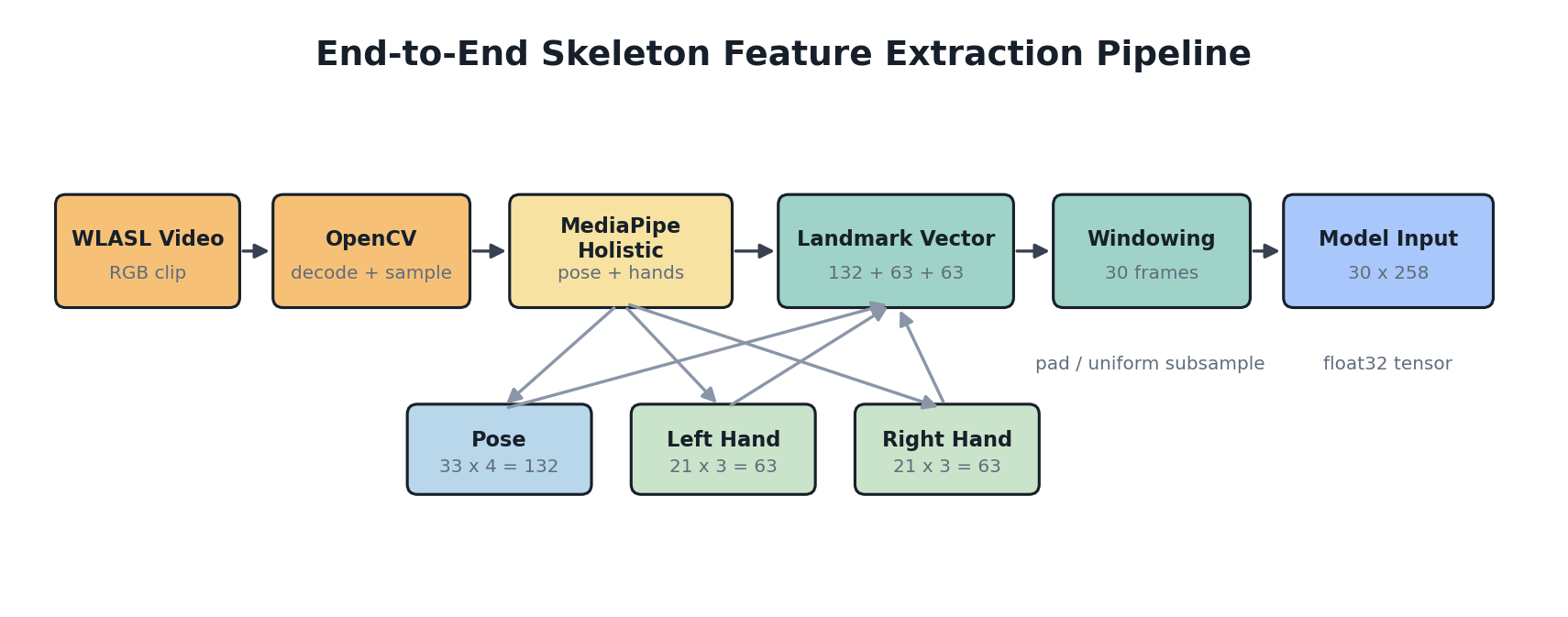
See
Your webcam captures live video — no special hardware, no sensors
Map
AI maps 258 keypoints across your hands, arms, and face every frame
Classify
30 frames of motion are analysed and matched to one of 200 known signs
Speak
The recognized word appears on screen and is spoken aloud instantly
Live Recognition
Sign. Watch. Listen.
- Recognized signs appear here
Good lighting + plain background = higher accuracy. The AI normalizes for body size so distance doesn't matter.
A camera that speaks
sign language.
Not a proof of concept. A deployable application — live on the web, working right now, zero installation required.
Top-1 recognition rate across 200 signs — competitive with published research on the same benchmark dataset.
End-to-end response time from sign completion to spoken word output — fast enough for natural conversation flow.
Works regardless of height, hand size, skin tone, or how far you are from the camera. No calibration needed.
Running on cloud infrastructure with uptime monitoring. Any browser, any device, just allow camera access.
Healthcare
Deaf patients communicating medical needs without a pre-booked interpreter
Education
Deaf students accessing AI tutoring platforms using their natural language
Workplace
Real-time translation in meetings and interviews where interpreters aren't available
Smart Interfaces
Controlling devices and applications through gesture — no voice or touch required
Numbers that
back the claim.
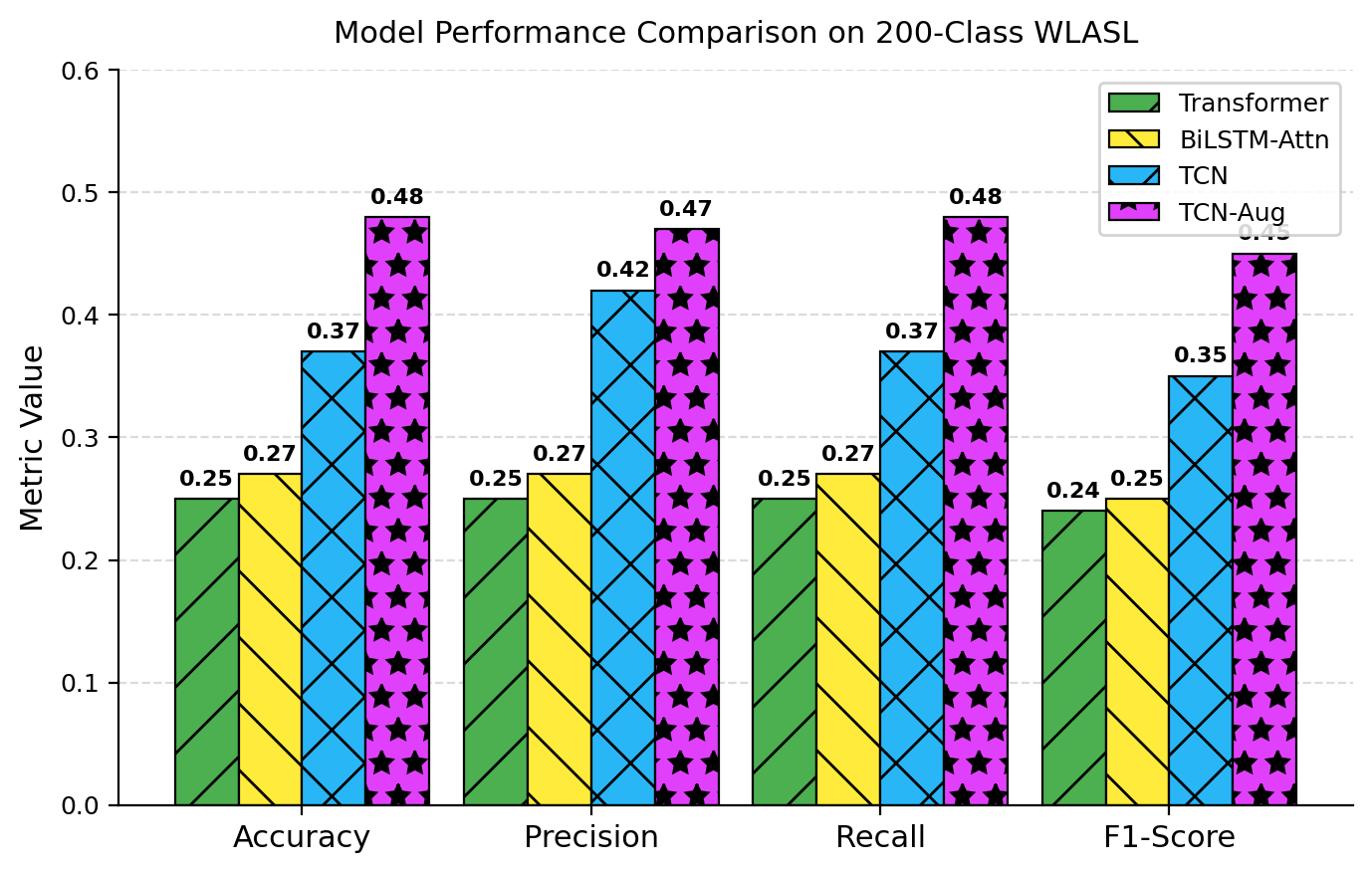
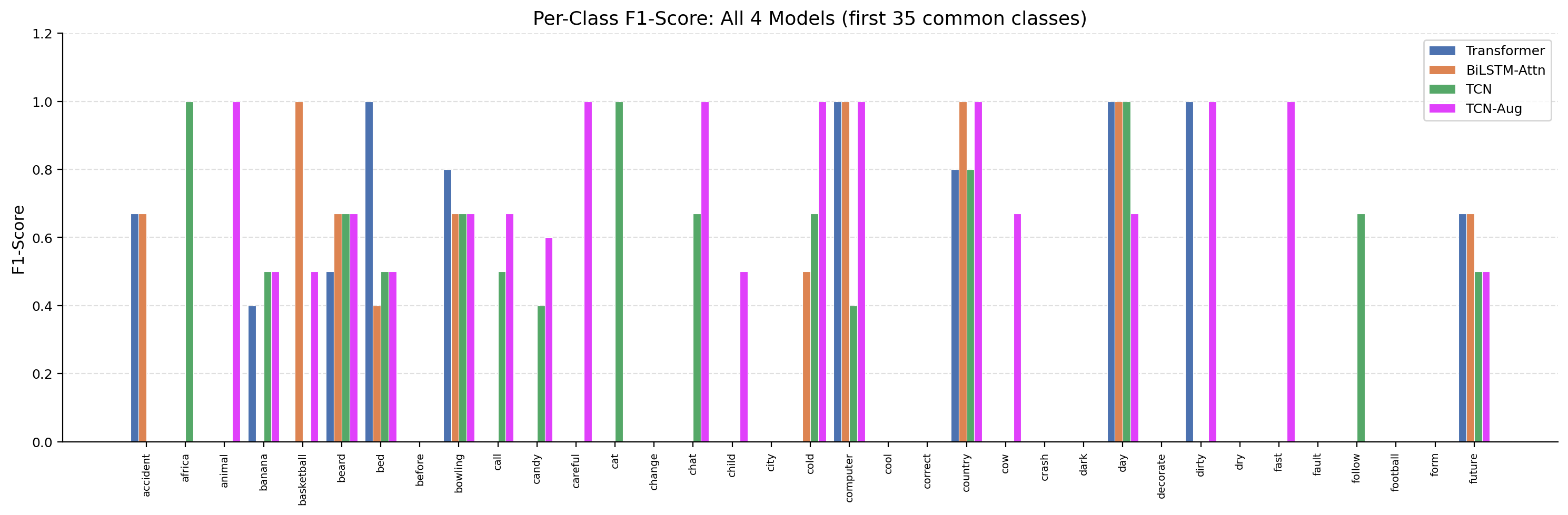
Four model variants were evaluated on the same benchmark. One won decisively — and it's the one running in the live demo.
Accuracy, F1, precision, and recall — the champion model (orange) leads across all four.
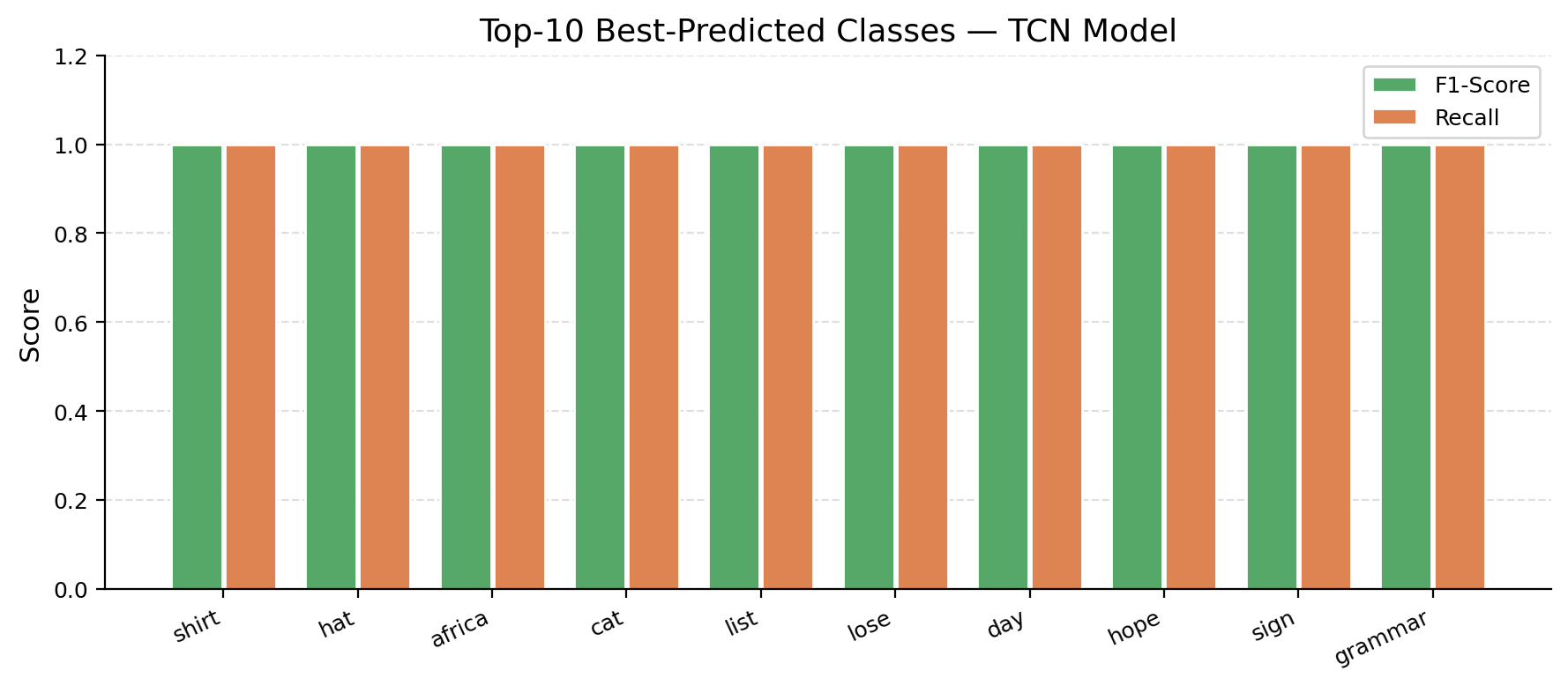
F1 distribution across all 200 signs. The champion maintains higher scores across dynamic motion signs.
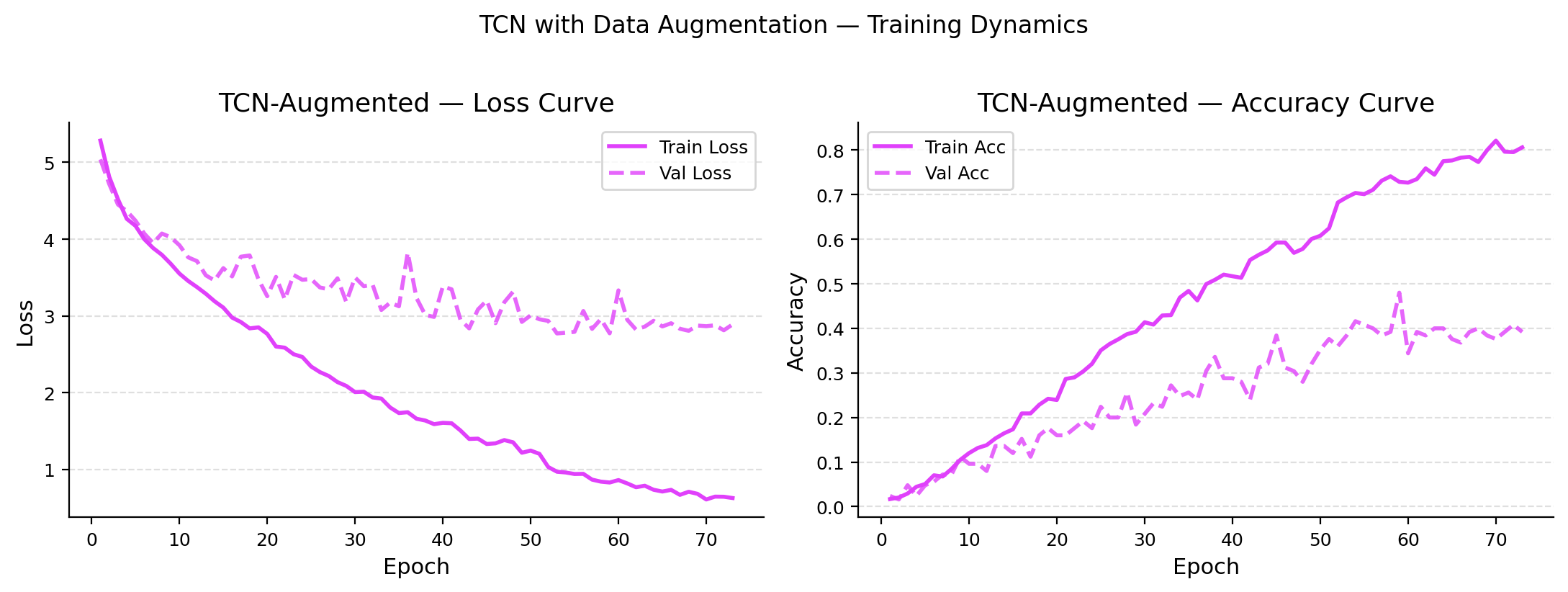
Clean, stable learning curves — no overfitting, healthy validation gap, converges to 48% accuracy.
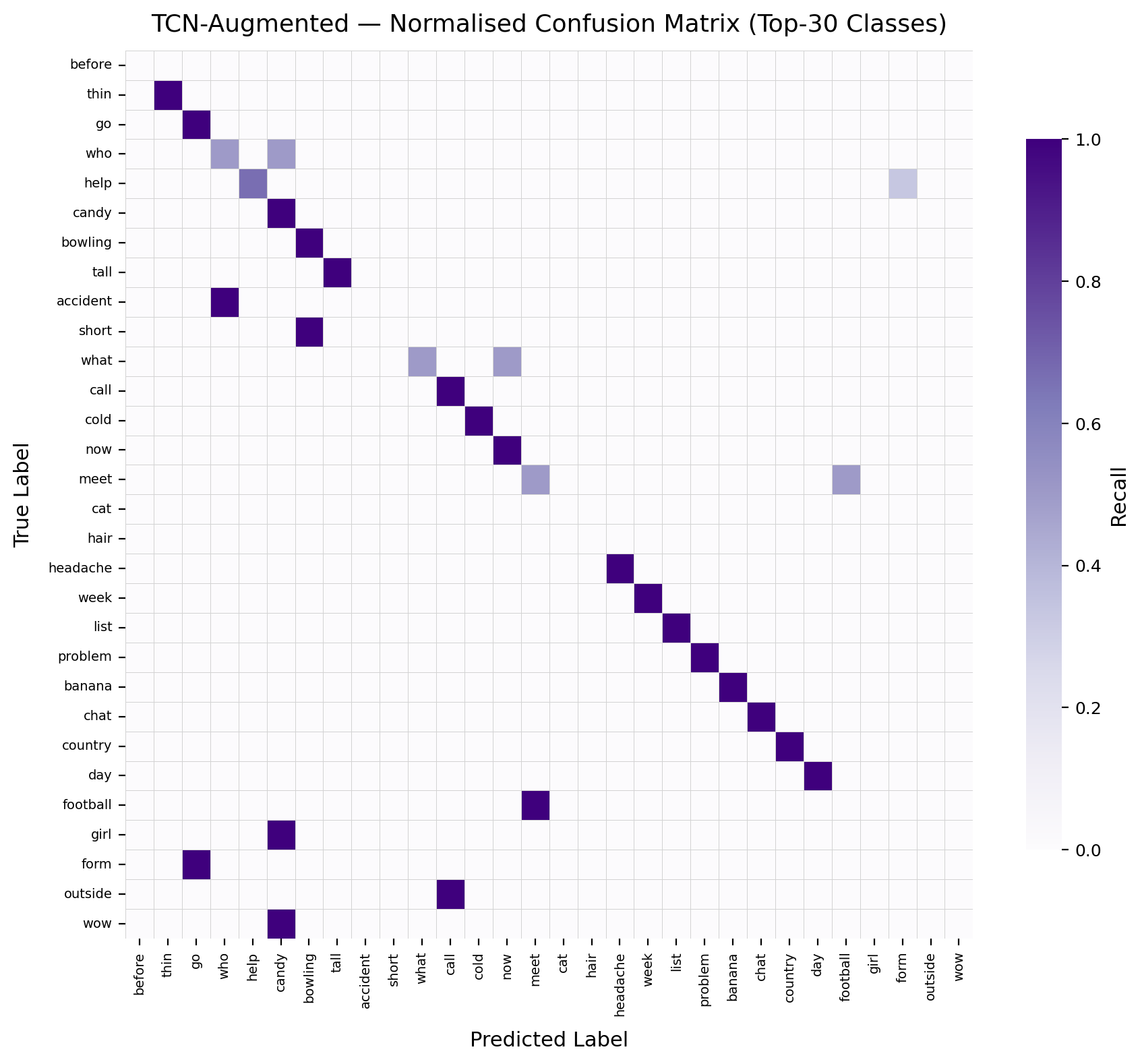
Strong diagonal = consistent, confident classification. The model knows what it knows.